Why Proper Grease Disposal Is Essential for Restaurant Success
Introduction:
There's a moment every restaurant owner dreads: a health inspector crouches down near the grease trap, or a customer mentions a strange smell near the back entrance, or a plumber shows up mid-dinner-rush shaking their head at a pipe packed solid with hardened fat. In almost every case, the root cause traces back to the same overlooked culprit grease that wasn't disposed of properly.
It's easy to underestimate how much grease disposal actually matters. It doesn't show up on a menu, customers rarely think about it, and it's not the kind of thing that gets discussed in staff meetings unless something's already gone wrong. But behind the scenes, grease disposal is one of the quiet forces that determines whether a kitchen runs smoothly or lurches from one avoidable crisis to the next. It touches your plumbing, your equipment, your compliance status, your fire safety, and ultimately, your bottom line.
In this article, we'll dig into why proper grease disposal deserves a permanent spot on your list of operational priorities, how it connects directly to used cooking oil recycling, and what it means for broader commercial kitchen maintenance. If you've ever treated grease handling as an afterthought, this is the case for why that needs to change.
Grease Disposal Isn't Just About Oil It's a System
When people hear "grease disposal," they often think only of used fryer oil. But grease accumulates throughout a commercial kitchen in far more places than the fryer station. It builds up in exhaust hoods, on stovetops, inside drain lines, and within grease traps designed specifically to catch fats, oils, and grease (FOG) before they reach the municipal sewer system.
Proper grease disposal means managing all of these sources, not just the obvious one. A kitchen that diligently recycles its used fryer oil but neglects its grease trap, or lets hood filters go months without cleaning, is still exposed to nearly every risk that improper disposal creates. Real grease management is a system, and every part of that system needs attention.
This is exactly why grease disposal and commercial kitchen maintenance are so tightly linked. You can't separate the two. A kitchen's mechanical health its plumbing, its ventilation, its equipment lifespan depends directly on how consistently grease is captured, removed, and properly disposed of at every stage of the cooking process.
The Domino Effect of Poor Grease Disposal
Neglecting grease disposal rarely causes just one problem. It tends to trigger a chain reaction that touches nearly every part of the operation.
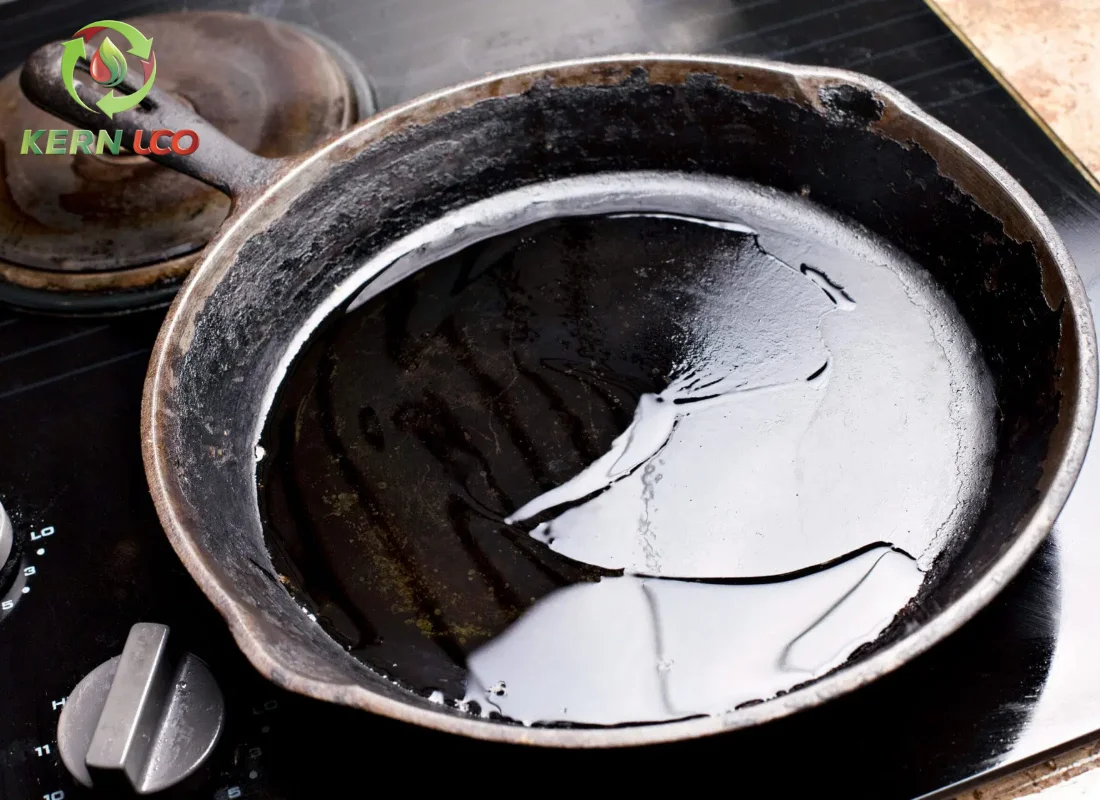
It starts with buildup. Grease that isn't cleaned regularly from hoods, filters, and surfaces begins to accumulate. This buildup isn't just unsightly it's a genuine fire hazard. Grease is flammable, and a layer of it inside an exhaust system near constant heat is one of the most common causes of commercial kitchen fires.
Buildup leads to blocked drains. Grease that goes down the drain, whether from dish pits, floor drains, or improperly maintained grease traps, cools and solidifies inside pipes. Over time, this narrows the pipe diameter until wastewater can't flow properly. Eventually, you get a full blockage usually discovered at the worst possible moment, like during a Saturday dinner rush.
Blocked drains create sanitation issues. Backed-up wastewater is a serious health code violation. It can force a temporary closure, trigger a failed inspection, and create an environment that's genuinely unsafe for staff and customers.
Sanitation issues invite regulatory action. Most municipalities enforce Fats, Oils, and Grease (FOG) ordinances specifically because grease-related sewer blockages are a widespread municipal problem. Restaurants found in violation face fines, and repeat violations can escalate into more serious enforcement action, including potential threats to operating permits.
All of it damages reputation. Word travels fast when a restaurant fails an inspection, has a visible plumbing issue, or develops a persistent odor problem. In an era of instant online reviews, that kind of reputational damage can linger far longer than the original plumbing issue ever did.
The point isn't to scare anyone it's to make clear that grease disposal isn't a minor housekeeping task. It's connected to nearly every major risk a restaurant faces.
Why Grease Disposal and Oil Recycling Go Hand in Hand
A huge portion of the grease problem in commercial kitchens actually starts with used cooking oil. Fryer oil that's cooled, discarded improperly, or poured down a drain is one of the single biggest contributors to grease-related plumbing and sanitation issues.
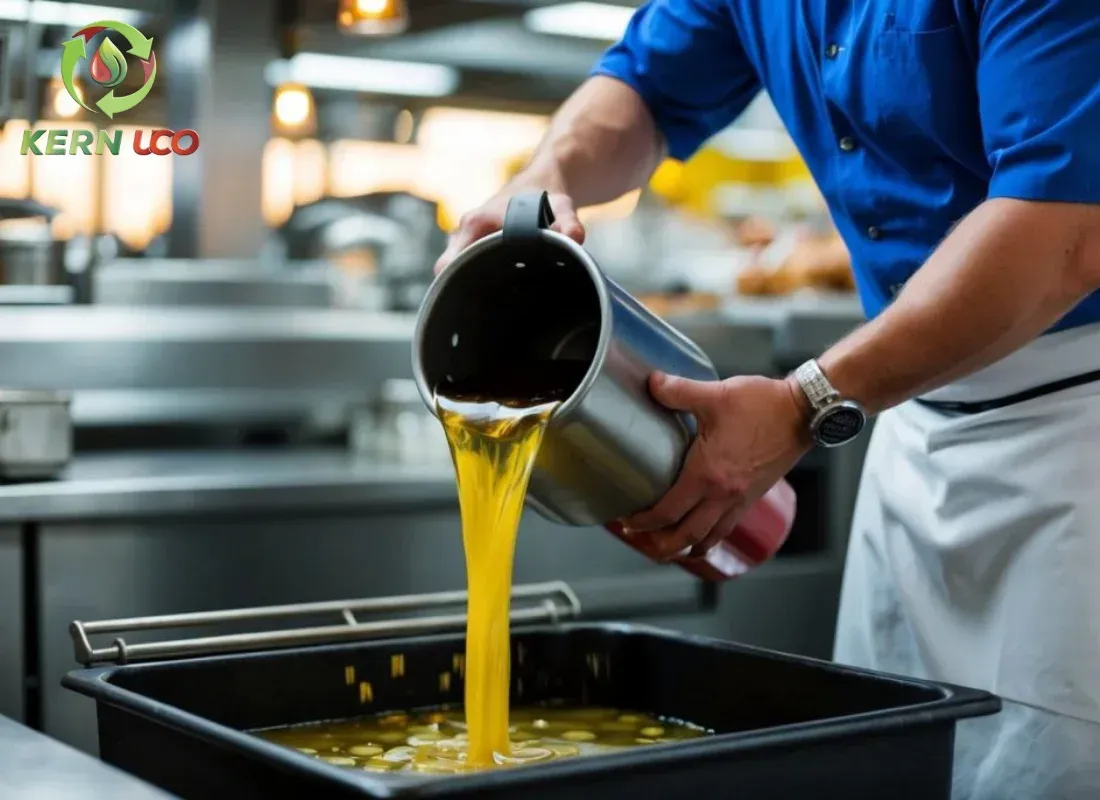
This is where used cooking oil recycling becomes such a critical piece of the puzzle. Instead of used oil becoming another source of grease buildup, a proper recycling system removes it from the kitchen entirely collected in sealed containers and picked up on a regular schedule by a licensed service, rather than lingering around as a disposal problem waiting to happen.
Restaurants that treat oil recycling and general grease disposal as two separate, disconnected issues are missing the bigger picture. They're the same problem, viewed from two angles. A kitchen that has a reliable oil recycling system in place is already solving a huge portion of its grease disposal challenge before it even starts.
If you haven't yet looked at how oil handling fits into your overall waste strategy, it's worth reading through our full guide on <a href=" target="_blank" rel="noopener noreferrer">restaurant waste management</a>, which breaks down how oil, food waste, and packaging all connect as part of one bigger operational system.
What Proper Grease Disposal Looks Like in Practice
So what does "doing it right" actually involve? Here's what a well-managed grease disposal system covers.
Scheduled used oil collection. Rather than storing spent fryer oil indefinitely or improvising disposal, a licensed collection service removes it on a set schedule, keeping your kitchen clear of accumulating oil and ensuring it's actually recycled into something useful, like biodiesel.
Regular grease trap cleaning. Grease traps are designed to intercept fats, oils, and grease before wastewater reaches the sewer line, but they need to be pumped and cleaned on a consistent schedule. A neglected grease trap fills up and stops doing its job, letting grease pass straight into the plumbing system it was meant to protect.
Hood and exhaust system cleaning. Grease vapor rises during cooking and settles inside exhaust hoods and ductwork. Regular professional cleaning of these systems isn't just about compliance with fire codes it's a direct fire prevention measure.
Staff protocols for daily grease handling. Simple habits, like wiping down grill surfaces, using drain screens to catch food and grease particles, and never pouring oil or grease down a sink, make a measurable difference over time.
Documentation and recordkeeping. Keeping records of grease trap cleanings, oil pickups, and hood cleanings isn't just good practice it's often a legal requirement, and it's the fastest way to demonstrate compliance during a health inspection.
None of this needs to be complicated, but it does need to be consistent. Grease disposal isn't something you can handle sporadically and expect good results.
How This Connects to Commercial Kitchen Maintenance
It's worth zooming out to see how grease disposal fits into the bigger picture of commercial kitchen maintenance. Kitchens are full of expensive equipment fryers, exhaust systems, plumbing infrastructure and grease is one of the biggest threats to the longevity of nearly all of it.
Fryers last longer with proper oil management. Oil that's filtered, monitored, and replaced on a sensible schedule puts less strain on fryer components and reduces the frequency of costly repairs.
Exhaust systems function better and last longer. Grease buildup restricts airflow and forces ventilation systems to work harder, which shortens their lifespan and increases energy costs.
Plumbing systems stay reliable. Pipes that aren't fighting grease buildup are far less likely to fail unexpectedly, which means fewer emergency repair calls and less disruption to service.
Preventive maintenance becomes more effective. Technicians doing routine maintenance checks can do their jobs more effectively in a kitchen that isn't fighting years of accumulated grease. Small issues get caught early instead of being hidden under buildup.
When grease disposal is handled properly, it acts almost like preventive medicine for the rest of your kitchen's infrastructure. It reduces the strain on nearly every mechanical system you depend on daily.
The Bigger Picture: Where Recycled Grease and Oil Actually Go
It's easy to think of grease disposal purely in terms of avoiding problems, but there's a more positive story here too. Properly collected used cooking oil doesn't just disappear into a landfill it becomes raw material for renewable products, most notably biodiesel, along with applications in animal feed and other industrial uses.
This is part of a growing green commodities market, where organizations focused on sustainable sourcing and renewable resources, such as <a href=" target="_blank" rel="noopener noreferrer">Start Green Commodities</a>, play a role in connecting recycled oil to markets where it can actually be put to productive use. When your restaurant partners with a proper recycling service, you're not just avoiding fines and plumbing bills you're participating, in a small but real way, in a renewable resource supply chain.
That's a detail worth sharing with your team, and even with customers who increasingly care about where a business's waste actually ends up.
Building a Grease Disposal Routine That Sticks
If your restaurant's grease disposal process currently runs on improvisation rather than a real system, here's a simple way to build one that actually holds up over time.
Audit your current setup. Identify every point where grease accumulates fryers, grills, hoods, drains, and grease traps.
Set a maintenance calendar. Assign specific frequencies for oil pickup, grease trap cleaning, and hood cleaning based on your kitchen's volume.
Choose licensed, reliable service providers. For both oil recycling and grease trap service, verify licensing and ask for documentation with every visit.
Train staff on daily habits. Cover the basics: never pour grease down a drain, use drain screens, and store used oil properly between pickups.
Keep a maintenance log. Track every service visit so you have documentation ready for inspections and can spot patterns, like a grease trap that's filling faster than expected.
Reassess as your business grows. A schedule that worked when you opened may not match your needs a year or two later. Revisit it periodically.
None of these steps require major investment mostly consistency, the right vendors, and a bit of staff training.
Final Thoughts
Proper grease disposal doesn't get the attention it deserves in most restaurant operations, largely because its costs are invisible until something goes wrong. But the connection between grease handling, used cooking oil recycling, and overall commercial kitchen maintenance is too significant to ignore. A kitchen that manages grease well protects its plumbing, reduces fire risk, stays compliant with local regulations, and keeps its equipment running longer all while contributing to a renewable resource supply chain rather than sending waste straight into a landfill or sewer system.
The restaurants that succeed long-term tend to be the ones that treat grease disposal as a real system, not an afterthought. It's a relatively small operational investment that protects nearly every other part of the business and that makes it one of the more overlooked keys to long-term restaurant success.