
oil-disposal-mistakes-commercial-kitchens
Commercial Kitchen Oil Disposal: Common Mistakes and How to Avoid Them
If you've ever managed a commercial kitchen, you already know that cooking oil disposal isn't exactly the most exciting part of the job. It doesn't show up on menus, customers never see it, and it's easy to push to the bottom of the priority list when the kitchen is slammed. But here's the reality: how a kitchen handles its used oil says a lot about how well it's actually run and getting it wrong can cost far more than most owners expect.
From clogged pipes to surprise fines, poor commercial kitchen oil disposal has a way of turning a "small" oversight into a genuinely expensive problem. The good news is that almost every mistake kitchens make with oil disposal is preventable once you know what to look for.
In this guide, we'll walk through the most common mistakes restaurants and commercial kitchens make when it comes to disposing of used cooking oil, why these mistakes happen, and exactly how to fix them including how used cooking oil recycling can turn a liability into a genuinely smart operational decision.
Why Cooking Oil Disposal Deserves More Attention Than It Gets
Cooking oil disposal often gets treated as an afterthought because, on any given day, it doesn't feel urgent. The fryer needs oil, the oil gets used, and eventually someone deals with what's left. But that casual approach is exactly how small problems turn into big ones.
Used cooking oil isn't like regular kitchen waste. It's thick, it solidifies as it cools, and it doesn't break down the way food scraps do. When it's mishandled, it doesn't just disappear it causes real, lasting damage to plumbing systems, drainage infrastructure, and even local waterways. On top of that, most cities have specific regulations around how commercial kitchens are supposed to store and dispose of used oil, and violating those rules can lead to fines or failed inspections.
None of this needs to be complicated, though. Most oil disposal problems trace back to a handful of repeated mistakes and once you know what they are, avoiding them becomes second nature.
Mistake #1: Pouring Oil Down the Drain
This is easily the most common and most damaging mistake in commercial kitchens. It seems harmless in the moment, especially with small amounts of oil, but it's one of the fastest ways to create a plumbing disaster.
Oil doesn't stay liquid once it cools. It solidifies inside pipes, gradually building up layers that trap other debris and eventually block the flow entirely. Over time, this leads to slow drains, backups, and in worse cases, complete pipe blockages that require expensive professional repairs.
The fix: Never pour oil even small amounts down a drain, no matter how "diluted" it seems with hot water. Every ounce adds to the buildup. Instead, oil should always be poured into a dedicated, sealed storage container designated specifically for used cooking oil.
Mistake #2: Using the Wrong Storage Containers
A lot of kitchens store used oil in whatever's available old buckets, mismatched containers, or open bins that were never designed to hold hot, greasy liquid. This might seem like a harmless shortcut, but it creates several problems at once: leaks, spills, odor buildup, and even safety hazards for staff who have to move these containers around.
Improper containers are also a common reason kitchens fail health inspections, since many local regulations specifically require sealed, leak-proof storage for used oil.
The fix: Invest in proper, food-grade oil storage containers designed for commercial kitchen use. These containers are built to handle hot oil safely, prevent leaks, and make transport far easier when it's time for pickup. Many waste cooking oil collection services actually provide these containers as part of their service, which removes the guesswork entirely.
Mistake #3: Letting Oil Sit Too Long Before Disposal
It's tempting to let a storage container fill up completely before dealing with it, especially during busy stretches. But oil that sits for too long creates its own set of problems strong odors, increased pest activity, and a higher risk of spills when containers become too heavy or overly full to handle safely.
The fix: Set a consistent disposal schedule based on how much oil your kitchen actually produces. A high-volume fryer operation might need weekly pickups, while a smaller kitchen could manage with a longer interval. The key is consistency oil disposal shouldn't be something staff scramble to handle only when a container is already overflowing.
Mistake #4: Assuming Any Disposal Method Is "Good Enough"
Many kitchen managers assume that as long as oil isn't going down the drain, they're in the clear. But regulations around commercial kitchen oil disposal vary significantly by city and state, and simply tossing oil in the regular trash even in a sealed container often violates local waste management rules.
Improper disposal, even when well-intentioned, can still result in fines or failed compliance checks if a health inspector determines the method doesn't meet local standards.
The fix: Get familiar with your local regulations, or better yet, work with a professional service that already understands them. A dedicated used cooking oil recycling partner will not only handle pickup but also ensure your kitchen's disposal process is fully compliant with local requirements, so you're never caught off guard during an inspection.
Mistake #5: Not Assigning Clear Responsibility
In a lot of kitchens, oil disposal is a task that technically belongs to "whoever notices it needs to be done." That vague ownership almost always leads to inconsistency some weeks it's handled promptly, other weeks it gets forgotten entirely until it becomes a visible problem.
The fix: Assign clear responsibility for oil handling to specific staff members or shifts. Even better, pair that with a scheduled collection service so the process runs on a predictable rhythm rather than depending on someone remembering to deal with it.
Mistake #6: Ignoring the Value of Used Oil
Perhaps the biggest missed opportunity in commercial kitchens is treating used cooking oil purely as waste. In reality, used oil is a valuable raw material once it's properly collected it gets processed into biodiesel, animal feed additives, and other industrial products. Kitchens that simply toss it out are throwing away something that could otherwise be put to productive use.
The fix: Partner with a used cooking oil recycling service instead of treating disposal as a pure cost. Many kitchens are surprised to learn that recycling their oil isn't just more responsible it's often more economical too, since recycling partners see genuine value in what your kitchen considers waste.
Mistake #7: Overlooking Staff Training
Even with the right containers and the right schedule in place, oil disposal mistakes still happen when staff simply don't know the proper procedure. New hires especially may not realize that pouring oil down the drain is a problem, or that certain containers shouldn't be reused for other purposes.
The fix: Make oil handling part of standard kitchen training, not just something staff pick up by watching others. A five-minute walkthrough on proper storage, handling, and disposal procedures can prevent months of accumulated bad habits.
The Real Cost of Getting Oil Disposal Wrong
It's worth putting actual numbers to this, because "it's a bad habit" doesn't always motivate change the way "it's an expensive habit" does. A single grease-related plumbing blockage can cost anywhere from a few hundred to several thousand dollars to fix, depending on how deep the clog is and whether it requires professional drain jetting or pipe replacement. And that's before factoring in the lost revenue from a kitchen that has to shut down mid-service to deal with it.
Fines for improper disposal add another layer of cost, and they tend to compound. A first violation might come with a warning, but repeat offenses often escalate into steeper penalties, and in some cases, repeated violations can affect a restaurant's standing with local health authorities entirely. Then there's the less obvious cost: staff time. Every minute spent dealing with an overflowing container, a slow drain, or an improvised disposal method is time not spent on service, prep, or actual kitchen work.
Compare all of that to the cost of a scheduled, professional collection service, and the math almost always favors prevention over reaction. A predictable monthly or weekly service fee is far easier to plan around than an unexpected plumbing emergency or compliance fine that shows up without warning.
How Oil Disposal Habits Reflect Overall Kitchen Management
There's a pattern that shows up again and again in commercial kitchens: the way a kitchen handles something as unglamorous as oil disposal tends to mirror how well it handles everything else. Kitchens with tight, well-documented processes for oil rarely have that process exist in isolation it's usually part of a broader culture of doing things properly, from food safety protocols to inventory management.
On the flip side, kitchens where oil disposal is inconsistent or improvised often have similar gaps elsewhere. That's not a coincidence. Oil disposal is one of those tasks that's easy to skip corners on because it doesn't directly affect what goes on the plate which is exactly why it tends to reveal how disciplined a kitchen's operations really are behind the scenes.
This is part of why bringing in a professional collection service does more than just solve the immediate oil problem. It forces a level of structure and consistency that tends to ripple outward into other parts of kitchen operations, simply because it establishes a reliable routine that staff can build habits around.
What to Look for When Choosing a Disposal Partner
Not all oil collection services operate the same way, and choosing the right one makes a real difference in how smoothly this whole process runs. A few things worth checking before committing to a provider:
Licensing and documentation. A legitimate service should be able to provide proof that they're licensed to collect and transport used cooking oil, along with documentation you can keep on file for compliance purposes.
Transparency about where the oil goes. Ask directly what happens to the oil after collection. A trustworthy partner should be able to explain their recycling process clearly, not vaguely.
Flexible scheduling. Your kitchen's oil output might change with seasons or menu shifts, so a provider that can adjust pickup frequency is more valuable than one locked into a rigid schedule.
Responsiveness. Kitchens run on tight timelines, and a provider who's hard to reach when you need an extra pickup or have a question isn't doing you any favors.
Local familiarity. A provider who understands your specific city or county's disposal regulations will save you from having to become a compliance expert yourself.
Taking the time to vet a provider properly upfront saves a lot of frustration later, especially compared to switching providers mid-year because the first one didn't deliver on reliability.
What Proper Commercial Kitchen Oil Disposal Actually Looks Like
Once you strip away the common mistakes, a well-run oil disposal system is actually pretty simple. It comes down to a few consistent habits:
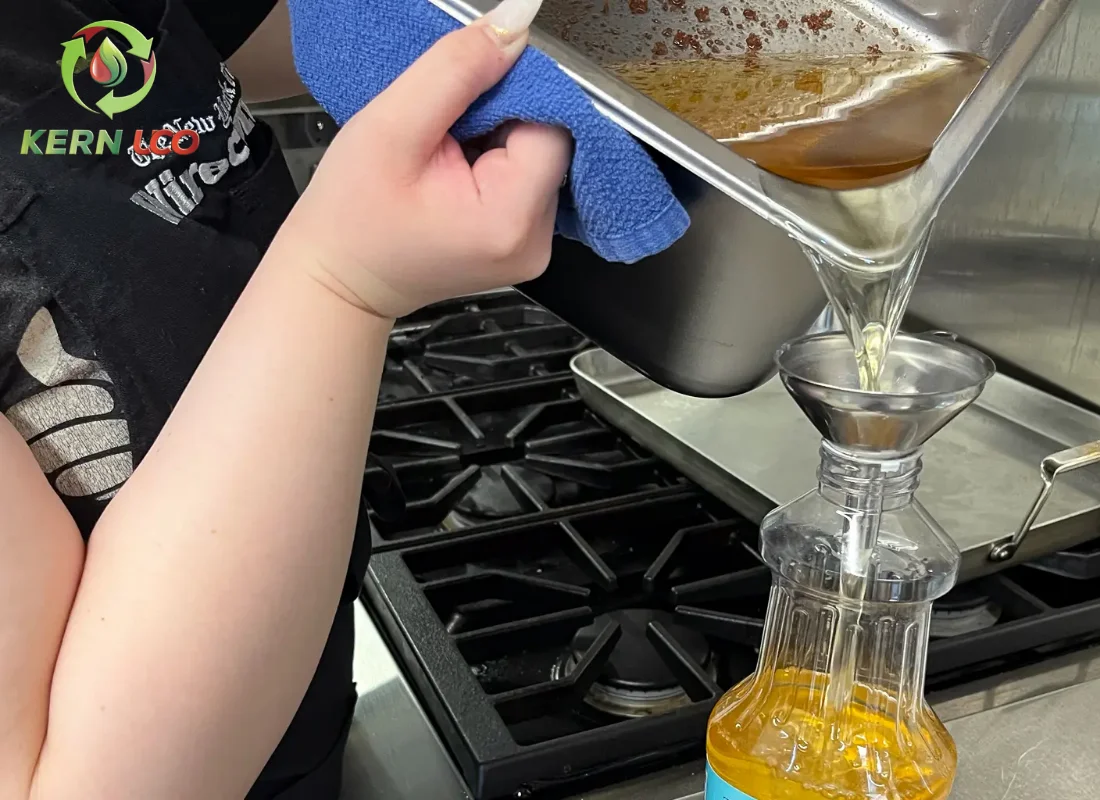
Oil goes straight into a dedicated, sealed, food-grade container never down a drain or into regular trash
Containers are stored in a designated, ventilated area away from heavy foot traffic
A set collection schedule keeps containers from overflowing or sitting too long
Staff are trained on proper handling from day one
A professional collection partner handles pickup and ensures oil is actually recycled, not just removed
When these pieces are in place, oil disposal stops being a recurring headache and becomes something the kitchen barely has to think about which is exactly the goal.
Why Working with a Professional Service Solves Most of These Problems at Once
It's worth pointing out that nearly every mistake covered above gets resolved the moment a kitchen partners with a dependable oil collection and recycling service. Instead of relying on staff to remember schedules, source proper containers, or stay updated on local regulations, a professional partner builds all of that into a system that just runs in the background.
If you're looking for a deeper breakdown of what a fully compliant setup should look like, this guide on <a href=">keeping restaurant oil disposal safe, clean, and compliant</a> walks through the specifics in more detail worth a read if you want to tighten up your kitchen's current process.
The Bigger Picture: Oil Disposal as Part of a Larger Sustainability Effort
Commercial kitchens don't operate in isolation. Every choice made in the back of house from ingredient sourcing to waste handling is part of a larger sustainability conversation that customers and communities increasingly care about. Used cooking oil recycling is one of the clearest, most tangible ways a kitchen can participate in that bigger picture.
This mindset isn't unique to food service, either. Businesses across many industries are rethinking how they treat waste materials, and companies like <a href=">Start Green Commodities</a> are part of a growing movement that treats byproducts like used oil as valuable resources rather than something to simply discard. For a commercial kitchen, tapping into that same approach with something as routine as fryer oil is a low-effort way to align with a much bigger shift happening across the industry.
Frequently Asked Questions
What's the biggest mistake kitchens make with cooking oil disposal? Pouring oil down the drain is by far the most common and most damaging mistake. Even small amounts contribute to pipe blockages over time, and it's one of the leading causes of expensive commercial plumbing repairs.
How do I know if my kitchen's current disposal method is compliant? Regulations vary by location, but most cities require sealed, leak-proof storage and prohibit disposing of oil in regular trash or drains. If you're unsure, a professional used cooking oil recycling service can review your current setup and flag anything that doesn't meet local standards.
Can small kitchens benefit from a collection service, or is it only for high-volume restaurants? Collection services can be scaled to fit kitchens of any size. Even smaller operations benefit from having a consistent, compliant system in place rather than handling disposal informally.
What happens to oil after it's collected by a recycling service? After collection, used oil typically goes through filtration and refining before being converted into products like biodiesel or animal feed additives giving it a genuinely useful second life instead of ending up in a landfill or waterway.
How often should containers be picked up? It depends on how much oil your kitchen produces. High-volume fryer operations often need weekly service, while smaller kitchens might only need pickups every few weeks. A good collection partner will help determine the right frequency based on your actual output.
Final Thoughts
Commercial kitchen oil disposal isn't glamorous, but it's one of those behind-the-scenes systems that quietly determines how smoothly a kitchen actually runs. The mistakes covered here pouring oil down drains, using the wrong containers, letting oil sit too long, skipping compliance checks, and leaving responsibility undefined are all common, but none of them are difficult to fix.
The kitchens that get this right aren't necessarily the ones with the most resources. They're the ones that treat oil disposal as a real system instead of an afterthought, often by partnering with a used cooking oil recycling service that takes the guesswork out of the process entirely. Fix the small mistakes, build a consistent routine, and commercial kitchen oil disposal stops being a liability and starts being one less thing to worry about.